
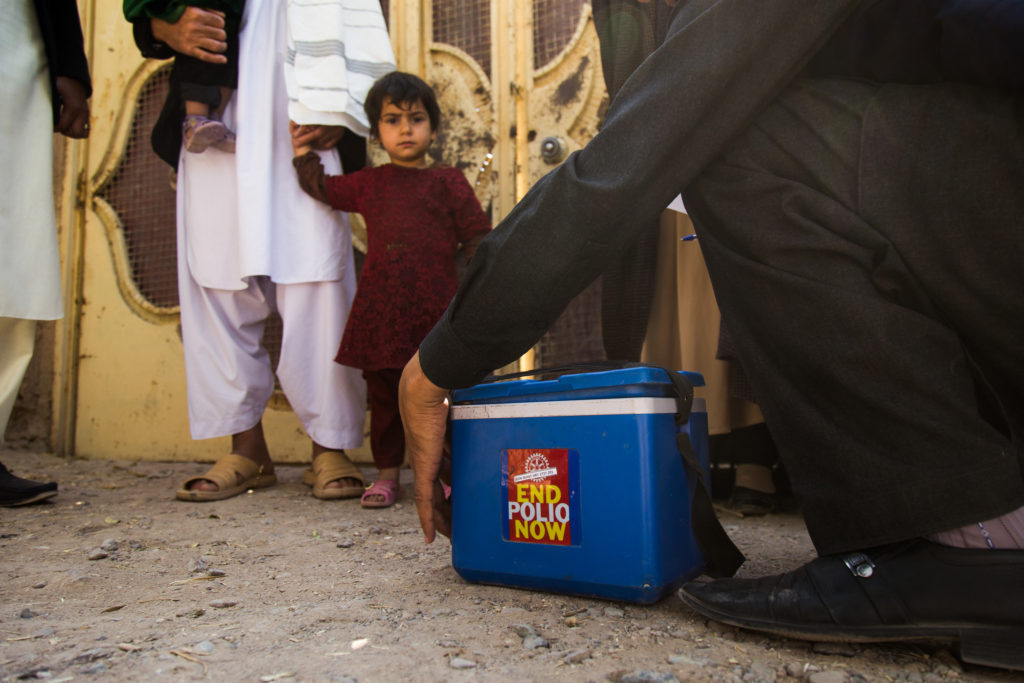
Different nations of the world have fought well to eradicate poliovirus. In 1988, when the Global Polio Eradication Initiative (GPEI) began, polio used to paralyze more than 350,000 children worldwide annually. The GPEI runs with support from its partners which includes the WHO, UNICEF, Rotary International, the US Centers for Disease Control and Prevention (CDC), and the Bill and Melinda Gates Foundation. So far, it has vaccinated over 2.5 billion children throughout the globe with an international investment of more than $11bn.
Unfortunately, Pakistan is one of the two countries where polio is still endemic. In Pakistan, the Polio Eradication Program is a public-private partnership that includes the Government of Pakistan as well as the aforementioned entities. The program started in 1994 and has made significant progress with case numbers declining by 99 percent from the 20,000 cases that were recorded in the early 1990s. The program continues to lead polio campaigns all over the country with dedicated health workers who ensure each child receives the oral polio vaccine. In 2020, despite COVID-19 lockdowns, the program reached out to over 39 million under-five children with over 260,000 health workers involved. However, despite their laudable efforts, Pakistan along with Afghanistan remains one of the two countries in the world where polio remains endemic, with 77 cases already identified this year.
In 2014, after an exponential rise in polio cases across the country, the World Health Organization (WHO) mandated a travel restriction on those leaving the country to show that they had taken the Polio vaccine a month prior to departure. Similarly, international tourists are recommended to take polio drops when coming to Pakistan, especially if going to areas where it is particularly prevalent.
For the WHO, the government’s responsibilities lie both towards their own population and those beyond its boundaries by ensuring it “minimizes the danger and impact of acute public health events that endanger the collective health of populations living across geographical regions and international boundaries.” Pakistan is currently classified by the International Health Regulations (IHR) as a state infected with WPV1, which has a potential risk of spreading internationally. This risk has been deemed at its highest level since 2014. Poliomyelitis or poliovirus is an infectious disease spread primarily through human contact, through the ‘fecal-oral route. It spreads into the environment through an infected person’s feces; ultimately affecting the surrounding residents and community.
It can affect any age; however, children under the age of five are most susceptible to getting infected with this virus. The infected individuals can end up suffering from an irremediable ‘polio paralysis’ as the virus attacks the nervous system in a short time and often leads to even death. While the poliovirus has virtually been eliminated, it still remains a threat to global health because as long as a single child remains infected, the virus can easily be spread into the countries that are polio-free at the moment and can also affect the unimmunized populations as well.
by: Abeer Arshad
Tags: International Health Regulations (IHR), Polio Drives in Pakistan, polio paralysis, poliovirus, who



Leave a Reply
You must be logged in to post a comment.