
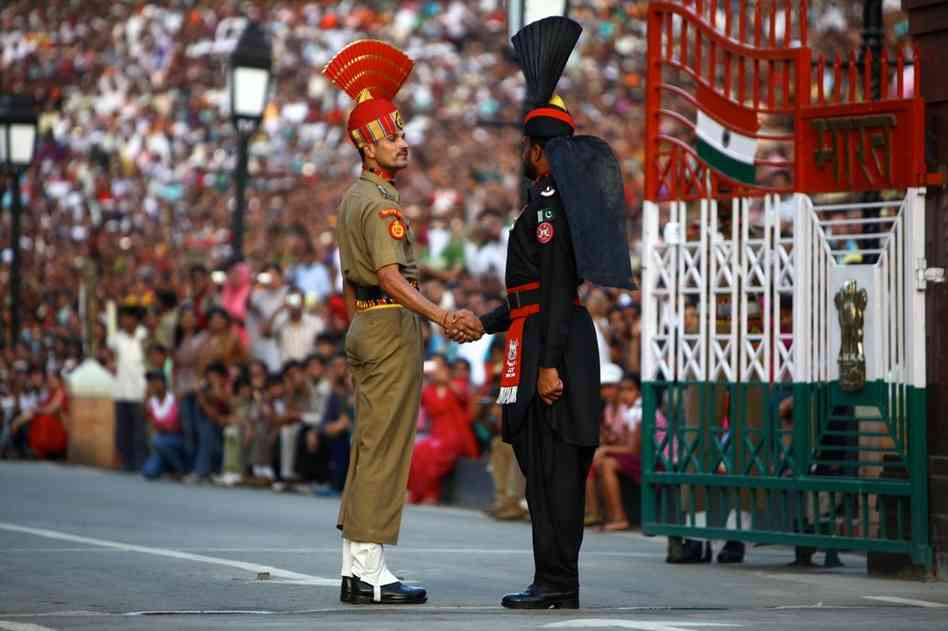
Narendra Modi called off foreign secretary-level talks between India and Pakistan less than three months after he invited Sharif to his inauguration as a gesture of goodwill. It was rather astonishing as Modi had invited his Pakistani counterpart himself , in retrospect it seems like it was just a ploy to display some sort of superiority. Nawaz was largely ignored during his stay in New Delhi and not given much importance. He was not able to discuss important issues such as the Kashmir issue or India’s accumulation of water by building dams on the rivers that flow into Pakistan.
High-level Indian government sources said India had told Pakistan any indulgence to separatists was unacceptable when Pakistan PM Nawaz Sharif came for the Modi inauguration. Sharif stayed away from the Hurriyat group when he went to India. It was an opportunity wasted due to the new Indian Prime Minister’s bull-headed stance on Pakistan and Nawaz Sharif faced severe criticism at home for his futile visit. It has been proven time and again that Pakistan needs to formulate a policy of step by step and integrated approach to relations with India. India has to be kept engaged in dialogue on core issues on a regular basis.
Nawaz Sharif has had extraordinarily good terms with the Indians and has serious business interests there as well , still the Indian government has sent Sharif a terse message to desist from any contact with Kashmiri leaders. Recently, Pakistan High Commissioner to India had meetings with leaders of the All Party Hurriyat Conference, such meetings have been happening for decades. Pakistan was snubbed and told off , saying the neighbors interference in ‘India’s internal affair’ was unacceptable. The foreign secretary level talks scheduled for 25th August in Islamabad were cancelled. Indian External Affairs announced that ‘ Pakistan High Commissioner’s meeting with the ‘so-called’ separatist leaders undermines the constructive engagement initiated by Prime Minister Narendra Modi on his very first day in office.’
Pakistan was told to choose between an Indo-Pak dialogue or meeting the Kashmir leaders. It was also attempted to raise question about Pakistan,s intentions , this was totally unreal as the Kashmir issue is one of the oldest pending issues with the United Nations. It is formally recognized as disputed territory and Pakistan is totally within its rights to maintain contact with Kashmiri leaders. There are UN resolutions declaring Kashmir disputed territory. Disregarding India’s views, the Pakistani High Commissioner went ahead to meet Mirwaiz Umar Farooq, Syed Ali Shah Geelani, Shabir Ahmad Shah and Yasin Malik.
Yasin Malik of JKLF protested the Indian government decision saying it showed India was not interested in talking about Kashmir at all, only in talking trade with Pakistan. The cessation of talks was surprising as all Pakistan High Commissioners have met Hurriyat leaders on their Independence Day celebrations and Iftars over the years.
This stern reprimand signals some new Indian plans in the offing, bitter consequences for Kashmir in the future could be the reason the talks have been cancelled. It looks like the Kashmir liberation movement could be brutally suppressed in the Modi era. Modi has a distinctive belligerent attitude, which he displayed when ruling Gujarat. The Modi government wants to divert Indians from internal problems by keeping the temperature high on the border.
Indian media has picked up the topic with relish , presenting Modi and his government on higher ground. “Pakistan and powers within that country do not want Indo-Pak ties to be normal,” Defence Minister Arun Jaitley said. Along with this, he also upped the ante with cross border firing almost on a daily basis.
Resuming these talks would be an uphill task in the absence of back channel diplomacy. This meeting was fundamental for future engagement , its cancellation would set the talks process in reverse now. Pakistan termed the decision to call off talks a setback to efforts by Pakistani leadership to promote good , neighbourly relations with India. Pakistan Foreign Office spokesperson Tasnim Aslam said Pakistan was not subservient to India , and was a legitimate stakeholder in the Kashmir dispute.
There should be no softening of attitude towards India when their posture is so hawkish. Unilateral concessions to India like trade and transit trade route to Afghansitan should not be considered, also MFN status should not be given to India. Meaningful dialogue is only possible on the basis of equality, India cannot and should not try to bully Pakistan if it wants peace in the region. Its arrogance should be ignored and there should be no appeasement as this could be mistaken for weakness on our part. Its preconditions for dialogue are merely to create hurdles in the peace process. Since the beginning of the Composite Dialogue process, Pakistani leaders and officials regularly met Kashmiri leaders before and after the talks to receive feedback and learn about the situation on ground.
This time India has adopted a stern tone, forbidding Pakistan from meeting the Kashmiri leaders. This dictate denotes the different India since the advent of Modi, a hawkish and aggressive country trying to divert its public from problems at home. “Pakistan’s defiance” was the wording used by the Indian Ministry of External Affairs as it briefed Indian media about what India had forbidden Pakistan from doing. Pakistan was being told to make a choice between Kashmir and talks with India. The move might impact an expected meeting between Modi and Nawaz Sharif in New York on the sidelines of the UN General Assembly next month.
On 15th August, Modi gave an unusually lengthy Independence Day speech. He talked about strengthening relations with the neighbours which marks continuity with previous governments. It should be interesting to note that there was no mention of Pakistan, while a substantial passage was devoted to Nepal,s successful transition from insurgency to a democracy. It seems Modi , in his arrogance ,did not consider it suitable to mention Pakistan. More developments came about after a speech by Modi in Jammu last week, where he accused Pakistan of continuing a proxy war of terror against India.
This was the first signal that Modi was planning to pump up the rhetoric for ratings and a diversion. Some foreign policy experts also believe that this latest India /Pakistan upset could be a blessing in disguise for the beleaguered Sharif who is facing a political impasse literally at his doorstep, the PM House.
Things have come to such a pass due to years and years of leniency shown to India in the hope things would mend. The US has been influencing governments in the past to offer one-sided concessions , back channel dealings and personal agendas of the government have made the situation nearly unrecoverable. All this has to change, Pakistan has to put its foot down and let it be known to India that it cannot be talked down to in this manner.
The Indian attempt to relegate a subservient status to Pakistan cannot be tolerated.
By: Sabena Siddiqi
Note: Al-Rasub is not responsible for Writer personal Opinion.
Tags: article, opinion, The India Pakistan Standoff
You must be logged in to post a comment.


I must compliment Ms Sabena Siddiqi for writing very balanced view point. I would like to add on that Kashmir is an issue of great significance to save innocent Kashmiris from an avoidable bloodshed and allow them to lead their life in line to their free will, aspirations and wishes. Here I would like to refer from an authentic record, the Govt. of India, White Paper on Jammu & Kashmir, Delhi 1948, p. 46 and Telegram, dated 25 October 1947, from Foreign, New Delhi, to C.R. Attlee, Prime Minister of UK, wherein late Prime Minister of India Mr Nehru vociferously reiterated after the forceful annexation of valley of Kashmir and I quote “I SHOULD LIKE TO MAKE IT CLEAR THAT [the] QUESTION OF AIDING KASHMIR IN EMERGENCY IS NOT TO ACCEDE TO INDIA. Our view, which we have repeatedly made public is that [the] QUESTION OF ACCESSION IN ANY DISPUTED TERRITORY OR STATE MUST BE DECIDED IN ACCORDANCE WITH THE WISHES OF THE PEOPLE AND WE ADHERE TO THIS VIEW. ” unquote. On another occasion ” Pandit Jawahar Lal Nehru as Prime Minister, in a broadcast from New Delhi on 2 November said and I quote “WE DECLARED THAT THE FATE OF KASHMIR IS ULTIMATELY DECIDED BY THE PEOPLE THAT PLEDGE WE HAVE GIVEN NOT ONLY TO THE PEOPLE OF KASHMIR BUT TO THE WORLD. WE WILL NOT & CANNOT BACK OUT OF IT. We are prepared when peace and law and order have been established to have a referendum held under international auspices like the United Nations. We want it to be a fair and just reference to the people, and we shall accept their verdict. I can imagine no fairer and juster offer ” unquote.
Since, India was adamant to forcefully annexed Kashmir, hence Pakistan in response send its forces. Having brokered cease fire, the UN in 1949, constituted a five-member commission made up of Argentina, Belgium, Columbia, Czechoslovakia and the United States DREW UP A RESOLUTION FOR REFERENDUM TO DECIDE KASHMIR’s future. The full text of resolution, which India never allowed its implementation also included the approved supplementary principles as part the Commission’s Resolution of 13 August 1948 which I am summarizing as following :-
1. The question of the accession of the State of Jammu and Kashmir to be decided through impartial plebiscite;
2. A plebiscite will be held when found by the Commission that arrangements for the plebiscite have been completed;
3.
(a) The Secretary-General of the UNO will nominate a Plebiscite Administrator of high international standing and commanding general confidence.
(b) Plebiscite Administrator shall derive from the State of J&K powers he considers necessary for ensuring impartiality of the freedom plebiscite.
(c) The Plebiscite Administrator shall have authority to appoint staff.
4.
(a) When the Commission is satisfied that peaceful conditions have been restored in the State, the Commission and the Plebiscite Administrator determine the final disposal of Indian and State armed forces, such disposal to be with due regard to the security of the State and the freedom of the plebiscite.
(b) Final disposal of the armed forces in that territory will be determined by the Commission and the Plebiscite Administrator.
5. All civil, political and military authorities within the State will be required to co-operate with the Plebiscite Administrator for the holding of the plebiscite.
6.
(a) All citizens of the State who have left it on account of the disturbances will be invited and be free to return and to exercise all their rights as such citizens.
(b) All person (other than citizens of the State) who on or since 15 August 1947 have entered it for other than lawful purpose, shall be required to leave the State.
7. All authorities within the State of J&K in collaboration with the Plebiscite Administrator ensure that:
(a) There is no threat, coercion or intimidation, bribery or other undue influence on the voters in the plebiscite;
(b) No restrictions are placed on legitimate political activity throughout the State. All subjects of the State, regardless of creed, caste or party, shall be safe and free in expressing their views and in voting on the question of the accession of the State.
(c) All political prisoners are released; Minorities are protected & no victimization.
8. The Plebiscite Administrator may refer to the U N Commission for India and Pakistan problems on which he may require assistance.
9. The Plebiscite Administrator shall report the result to the Commission and to the Government of J&K. The Commission shall then certify to the Security Council whether the plebiscite has or has not been free and impartial;
10. Upon the signature of the truce agreement the details of the foregoing proposals will be elaborated in the consultations envisaged in Part III of the Commission’s resolution of 13 August 1948. The Plebiscite Administrator will be fully associated in these consultation. So keeping the forgoing mutually consented duly brokered resolution by the UNO, the Kashmir dispute need to be resolved to ensure prevailing of peace between two countries which can’t afford enmity for no rhythm and reason. If enemies and blood suckers of yesterday in Europe can be best of friends of today then what’s stop two great nation to forget their past and move forward by resolving these troublesome issues as a win win. Indian Prime Minister Narindra Modi must keep in mind the whole perspective as 21st Century is a period of extreme challenges and two nuclear states can’t afford to remain logger head. Water and food security are two major issues and mostly likely wars in the current century amongst the states and regions will figure out as a result of disputes on these two contemptuous and highly volatile issues. To be honest it is rather more serious issue in the first quarter of current century for Pakistan and India, particularly so, when later is sequentially trying to divert the water flows of Kashmir, denying Pakistan of its rightful share which former just can’t afford to be Western Sahara. Let me high light the silver linings that SHINING INDIA is confronted. As World Economic Review it opines that India is the world poorest country and I therefore very strongly feel that its has moral right to stop Pakistan High Commissioner to meet its Kashmiri brethren’s who have sacrificed over 80,000 innocent people killed and over two thousand injured or are leading poorer life by declining them job opportunities on merit.
CORE ISSUE. World must understand that can poverty stricken country subjugation the rights of innocent Kashmiris can call itself “SHINING INDIA” particularly so when it’s people are leading pathetic life as unveiled in the subsequent paras as following:-
11. 900 million people earn only 20 rupees per day in India.
12. Out of which 500 million people earn only 10 rupees per day.
13. Out of which 250 million make only 5 rupees per day.
14. Out of which 50 million people make nothing.
15. India has created the most heinous society in the history of human race.
16. One million Indians carry the excreta of other Indians every day. This is
the greatest economic terrorism in the history of human race.
17. 5 lakh Indian villages are without water.
18. 34 families control 50% India – the greatest feudal system ever.
19. A great majority of Indian maataas and mothers in the villages relieve
themselves on the road side.
20. India is leading in AIDS, Blood Pressure, Stress Level and many other ills
and deceases.
21. India has the largest ghetto in the world, Bombay. And yet, Indians have
all the time to attack Muslims.
22. Indians have killed and massacred over 10 million Hindu female babies in
the last decade alone by forced abortions.
23. EveryEvery day, hundreds of Indian women are being raped by other
Indians.
24. When Muslims lost power in India, the literacy rate was 96%.
25. When British lost India, the literacy rate was reduced to 12% and they
left 160 million Indian poor and destitute.
26. Today, the number of poor and destitutes have climbed to 900 million.
27. Today, Indians have created the greatest feudal System in the history of
mankind.
28. Out of 1200 million Indians, only 35 million Indians are full time
employees.
29 . The rest are hopping from one place to another. Out of which 1.5 million are employed in military, few lakhs in Banking, Railway and government.
If anybody friend wants to authenticate the above, please watch RAJIVE DIXIT SPEECH IN HYDERABAD 2010 which will suffice where the SHINING INDIA stands today.
https://m.youtube.com/watch?v=X2n5zbw3YrI