
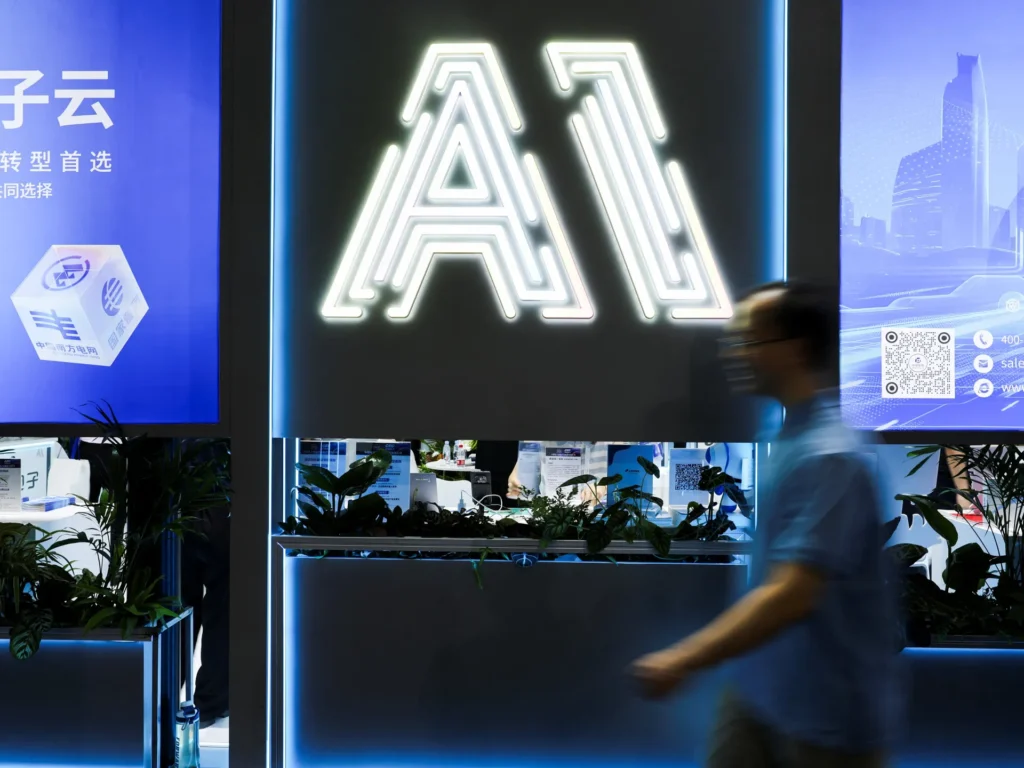
China’s artificial intelligence industry reached a historic inflection point in 2025. Faced with geopolitical pressure, export restrictions, and intense global competition, China accelerated its AI ambitions with unprecedented speed and scale. What emerged was not just national self-reliance, but innovations that reshaped the global AI ecosystem. Here are 10 pivotal developments in China’s AI industry that changed the world of AI.
1. China Achieved Near Self-Sufficiency in AI Models
One of the most world-changing moments came when Chinese companies successfully reduced reliance on Western AI models. Firms like Baidu, Alibaba, Tencent, and iFlytek released large-scale language models capable of competing with global leaders in Chinese-language reasoning, coding, and enterprise use cases. This shift proved that advanced AI development was no longer limited to Western ecosystems.
2. Baidu’s ERNIE Models Closed the Performance Gap
Baidu’s ERNIE series made major leaps in reasoning, multimodal understanding, and enterprise deployment. ERNIE’s deep integration with China’s search, cloud, and autonomous driving platforms showed how vertically integrated AI ecosystems can scale rapidly. This accelerated global conversations about domain-specific AI dominance, rather than one-model-fits-all approaches.
3. Open-Source AI from China Went Global
Chinese tech firms and research institutions significantly expanded open-source AI contributions. Models such as Qwen (Alibaba) and DeepSeek gained adoption among global developers, startups, and researchers due to their efficiency and permissive licensing. These releases challenged the notion that cutting-edge AI innovation must be closed or proprietary.
4. China Led the World in AI-Powered Manufacturing
China applied AI at unmatched scale in smart factories, robotics, quality inspection, and supply chain optimization. AI-driven manufacturing increased productivity while reducing costs and waste. This industrial AI revolution forced global manufacturers to rethink automation strategies or risk falling behind.
5. AI Chips Innovation Despite Sanctions
Despite restrictions on advanced semiconductor imports, China accelerated development of domestic AI chips. Companies such as Huawei (Ascend) and SMIC made major progress in AI accelerators optimized for inference and training efficiency. This reshaped the global chip race and demonstrated that innovation can thrive under constraints.
6. China’s AI Surveillance Tech Sparked Global Debate
China’s large-scale deployment of AI for facial recognition, smart cities, and public security sparked intense global discussions on privacy, governance, and ethical AI. While controversial, these systems demonstrated how AI can operate at population-level scale — influencing how other nations approached regulation and safeguards.
7. Autonomous Driving Advanced Faster Than Expected
Chinese companies such as Baidu Apollo, Pony.ai, and AutoX expanded autonomous driving pilots in major cities. China’s dense urban environments provided rich data for training perception and decision-making AI, pushing self-driving technology closer to real-world readiness and influencing global autonomous vehicle research.
8. AI Adoption Reached Mass Consumer Scale
Unlike many regions where AI remained enterprise-focused, China embedded AI deeply into daily consumer life — from AI tutors and medical triage tools to virtual assistants and content creation apps. Hundreds of millions of users interacted with AI daily, offering unmatched real-world feedback loops for rapid model improvement.
9. Government-Driven AI Strategy Set a New Model
China’s centralized AI strategy — combining regulation, funding, infrastructure, and talent development — demonstrated a unique governance approach. Massive investments in AI education, research hubs, and compute infrastructure changed how nations think about state-level AI competitiveness.
10. China Redefined AI’s Role in Global Competition
Perhaps the biggest change was philosophical. China’s progress proved that AI leadership is no longer monopolized by a single country or ideology. A multipolar AI world emerged, where innovation flows from multiple centers — accelerating global progress while increasing strategic competition.
Conclusion: A New AI World Order
China’s AI breakthroughs in 2025 didn’t just advance national goals — they reshaped the global AI balance of power. From open-source innovation and manufacturing automation to chips, autonomous systems, and mass adoption, China demonstrated that AI progress can follow diverse paths.
As the world enters a new era of AI rivalry and collaboration, one truth is clear: the future of artificial intelligence will be shaped not by one nation, but by the dynamic interaction between global ecosystems — with China firmly at the center of that transformation.
admin


Leave a Reply
You must be logged in to post a comment.