
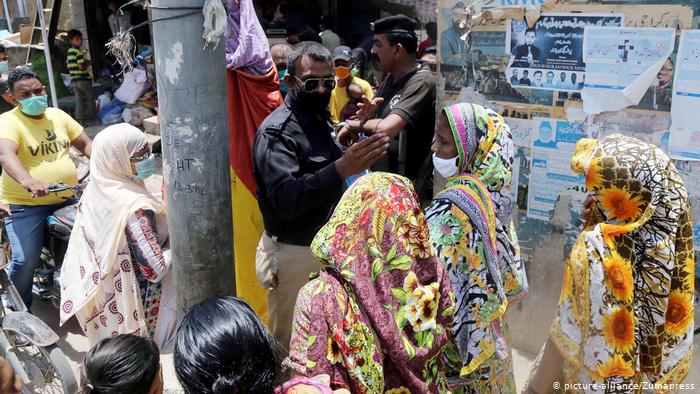
While governments around the world trying hard to emerge from damage caused by pandemic lockdowns to the economies, there are some other matters that need their attention. The coronavirus crisis has strengthened social inequalities in Pakistan, disproportionately impacting vulnerable groups such as women and children. In a country like ours, the interventions to deal with the issue are inadequate.
During this time period, problems faced by the women escalated. According to the women rights organizations, women working in the informal sector are most impacted by domestic violence during the pandemic. Many have lost their jobs and are confined to small homes where distancing from abusive relatives became impossible.
Before the COVID-19 pandemic, many women in the country, were rarely comfortable in moving around the city all by themselves, given the risk of harassment or other forms of gender-based violence. At the present time of crisis, with restrictions on mobility outdoors because of quarantines and lockdowns, cases of domestic violence have surged globally, with the probability of a spike in Pakistan as well.
On April 15, 2020, the UN Secretary-General took to Twitter and expressed views regarding the escalating domestic violence around the world amidst COVID-19. After COVID-19, such incidents escalated not only in developing countries (where either domestic violence laws do not exist at all and if they exist, their implementation is week due to many reasons) but also in developed countries (where there are solid laws) also seem to be growing. In this case, in Pakistan, where social attitudes generally seem to be reluctant to mediate by making domestic violence a private matter, the situation is deteriorating further after the pandemic. There can be many reasons for this situation.
The main reason is that people are spending more time at home, because of lockdown. Moreover, women, regardless of their class, are expected to perform best in household chores, which have become more difficult to accomplish, especially in the absence of domestic workers because of COVID-19 scenario. This situation is more of a problem for working women, as on the one hand they are forced to fulfill their career responsibilities at home, in the form of work from home, while on the other hand, they are also worried about handling household chores efficiently.
The second major problem facing Pakistani women after Corona is the lack of education. Although it is not gender specific, if you look at the rural girls who traveled miles to reach government schools, there are many problems after the pandemic. Those who were previously involved in education are now at home and are forced to carry the burden of domestic responsibilities. The main reason for this is the ignorance of government schools about online education. This situation is even more troubling for girls because whenever the issue of continuing education in poor families in economic hardship comes up, boys are always given priority, regardless of qualifications. That is why the male literacy rate in the country is 70%, while the female literacy rate is as low as 48%. It is also important to point out that girls who are also involved in online education are also forced to take responsibility for household chores, which significantly affects their academic performance. Along with education, unemployment is also increasing.
Just like education, women’s health conditions have deteriorated since the pandemic. Especially for pregnant women who are wait for their medical checkups but are facing difficulties to visit hospital. Hospitals are already under pressure because of the COVID-19 patients, and access to medical services has become a struggle, especially for the women belonging to lower economic class. According to a United Nations report, 48.1% of women in Pakistan have no personal preference for access to medical care. In these circumstances, rural women who are already unable to access medical care for various reasons are forced to face more difficulties after the virus.
It is a mind-boggling fact that whether it is a pandemic or a war situation, history has shown that women are the easiest targets. The sad thing is that even in such crises, the ruling class does not take gender standards into account in its strategy. As a result, women as the weaker ones become more vulnerable.
by: Abeer Arshad




Leave a Reply
You must be logged in to post a comment.