
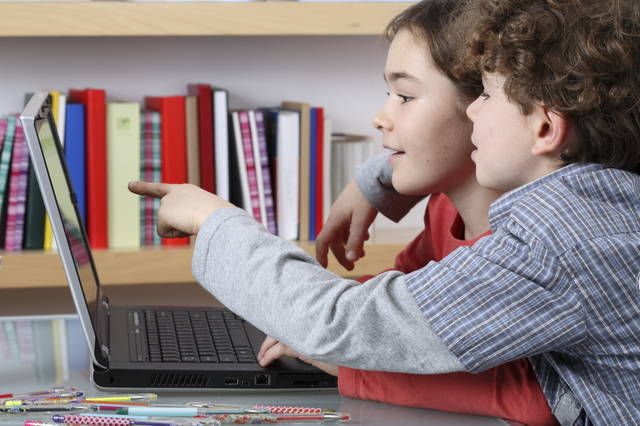
Teach your kids how to stay safe, be responsible and avoid incident while spending time on the web.
How much time do your kids spend online? Likely a lot. As a parent, it’s important to make sure that your kids’ online activities are safe and positive, and that they don’t encroach on things such as schoolwork, offline friendships and other activities or responsibilities.
We turned to Janice Ebenstiner, a child and family therapist at Kerrisdale Counselling Services in Vancouver, for some tips to help ensure your children are spending online time in a healthy and safe manner.
1. Keep your kids socially active offline
A huge part of the development process of a child involves creating connections and developing a sense of belonging and self, Ebenstiner explains. However, she’s also careful to point out: “Although many modes of technology may appear to offer a sense of social connection, support and inclusion, there is also a false sense of community in using online chat rooms, Facebook or MySpace forums for social networking,” she says. “Children of all ages require face-to-face social experiences that involve an interpersonal depth that does not exist online.”
Keeping your kids active in sports, the arts and other offline social and recreational groups will not only promote the development of healthy in-person relationships, it will also help reduce the risk of overusing technology, the therapist explains.
2. Set appropriate boundaries
Talk to your children about reasonable limits for using social media and precautions for its use. “Internet access should be monitored by parents and limits of use should be based on what other responsibilities a child has and ensuring these are attended to prior to spending hours online,” advises Ebenstiner.
“Most parents set a limit between one and two hours per day, outside of use for homework. This time frame seems to promote a balance between active and sedentary activities and leaves time for face-to-face socialization or recreational activities,” she says.
Ebenstiner also suggests setting aside technology-free family time where checking text or e-mail messages is not permitted by anyone – at mealtimes, for example. She also suggests keeping the computer in a common area of the home so that parents are able to monitor how much time is spent online and what kinds of websites their children are visiting. If these limits are set in place at the onset of technology use, they become the norm and are more readily enforced, she explains.
3. Make sure they’re aware of the consequences to their online behaviour
Communicate to your teens that what they do and say online can have concrete results in the real world. This means treating others as you would want to be treated.
“Most kids and teens express regret over information they have shared online. Ensure they are comfortable saying in person what they are choosing to post online or in a text,” says Ebenstiner.
It’s also a good idea to discuss the devastating consequences of cyber bullying with your children. “Developing the talents and skills which lead to a positive sense of self and a sense of personal power will help reduce the likelihood that a child will either be the victim or the perpetrator of cyber bullying,” she says.
4. Be aware of the potential risks and discuss them with your teen
As much potential as there is for fun and connecting online, there are also risks to be aware of. “Many teens have been approached online by strangers and should be made aware of the potential that adult predators often pose as youth,” Ebenstiner says. “Talk to your teen about the risks of visiting sites that could be controversial or could target them for spam, scams or creeps.” Filtering devices can be used to block unsafe websites.
Identity theft is another common online risk, Ebenstiner says. “Discuss with your child what information would be appropriate and not appropriate for sharing or posting online.” Instruct your kids to keep their passwords private, to post only their first name or a pseudonym, and to keep their home address, personal identity numbers, cellphone numbers, school name, class schedules, lists of friends or personal photographs private and to not share them on the Internet for public viewing, she advises.
5. Voice your concerns about their online habits
If you’re concerned about your child’s use of social media, talk to him or her about it. “If you notice your child neglecting household chores, schoolwork and social or recreational activities, disobeying computer time limits, having more virtual friends than real friends, acting defensive or secretive about their computer use, checking their computer or phone compulsively for messages, and appearing depressed or irritable when not on the Internet, then parents should discuss concerns of overuse with their teen,” Ebenstiner says.
Set reasonable boundaries and reinforce them. “If the agreed-upon limits are consistently enforced, over time this should become normative as teens re-engage with other more healthy social and recreational activities,” she explains.
If, however, a parent’s concern persists, and the problematic overuse and accompanying conflicts continue, consider seeking professional support.
Not allowing your children to be online isn’t an option in this day and age, but you can help ensure that the time they do spend on the web is safe, appropriate and well-balanced with offline activities.
The Canadian Living Magazine
Tags: internet, keep your kids safe online, kids on social media, limit online activity, web
You must be logged in to post a comment.




That is a very good tip particularly to those fresh to the
blogosphere. Brief but very precise info… Thanks for sharing this one.
A must read article!