
International market demands proper labeling of food products to maintain quality assurance and authenticity. Codex alimentarius and EU directives present international standards to comply with and both have almost same provisions. Some countries have their national standards as well. Labeling includes botanical and geographical origin of honey, nutritional parameters and physicochemical parameters like color, pH, water content and ash content etc. Following these standards fraud in honey labeling can be avoided.
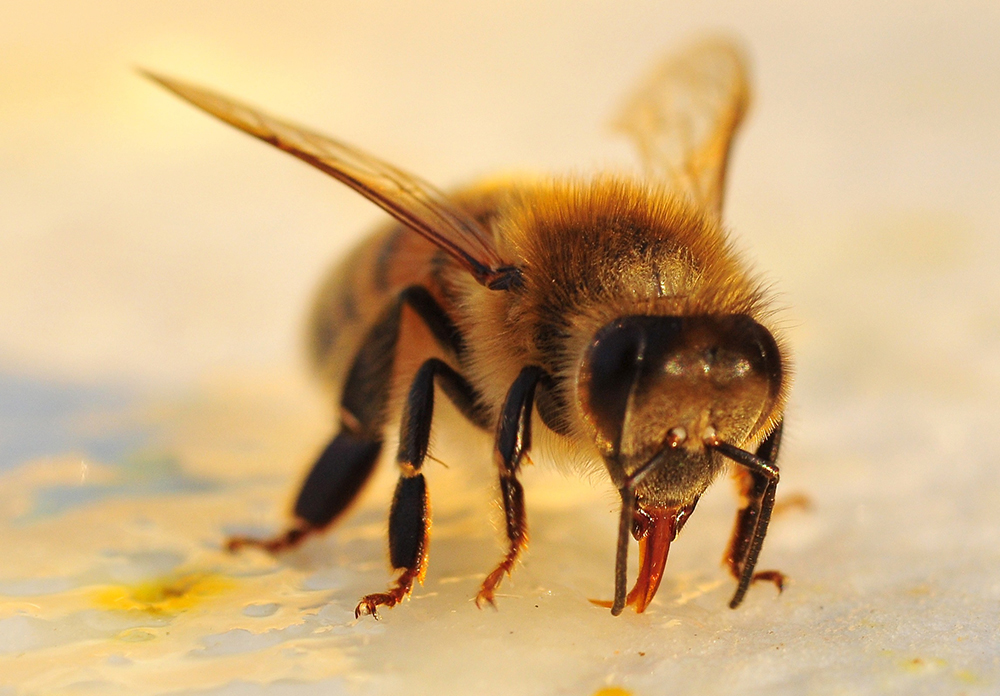
Honey is a natural product produced by honey bees (Apis mellifera) that collect the nectar from flowers and convert it into a delicious sweet food product that is more health beneficial nutritional option than plain sugar. Water, resin, nectar and pollen are four natural resources required by honey bees for survival. Honey bees forage an area of 3 to 5 km around their apiaries/beehives to collect nectar and pollen. Varieties of flowers foraged by honey bees give unique properties to honey thus affecting the composition of honey; many nutritional and medicinal benefits of honey are attributed to this complex composition.
According to the definition set by European Union Council Directive 2001/110/EC, “Honey is the natural sweet substance produced by the Apis mellifera bees from the nectar of plants or from the secretions of living parts of plants or excretions of plant sucking insects on the living parts of plants which the bees collect, transform by combining with specific substances of their own, deposit, dehydrate, store and leave in honeycombs to ripen and mature.” The U.S. Food and Drug Act defines honey as, “the nectar and saccharine exudation of plants, gathered, modified and stored in the comb by the honey bees (Apis mellifera and Apis dorsata) which contain no more than 25% water, 0.25% ash and 8% sucrose.”
If it is assumed that any hive includes at least 1000 worker bees, keeping in mind the interaction of each bee with 1000 flowers, the honey produced daily is considered to be the product of at least 1,000,000 interactions. The pollen and elemental profiling of resulting honey tells about the botanical and geographical origin of honey. Different techniques have been used to identify the pollens in honey. Pollens of different plant families have different morphological features; this shows the contribution of different plant families in honey. The vegetation of one geographical origin is different from other areas depending upon the climatic and geographical conditions thus affecting the composition of honey.
Honey bees can also be used as good environmental as well as biological indicator. Because they reveal the chemical impairment of the environment they live in through the residues present within their bodies or in beehive products like heavy metals that may be detected by means of suitable laboratory analyses.
by: Ayesha Mushtaq




Leave a Reply
You must be logged in to post a comment.