
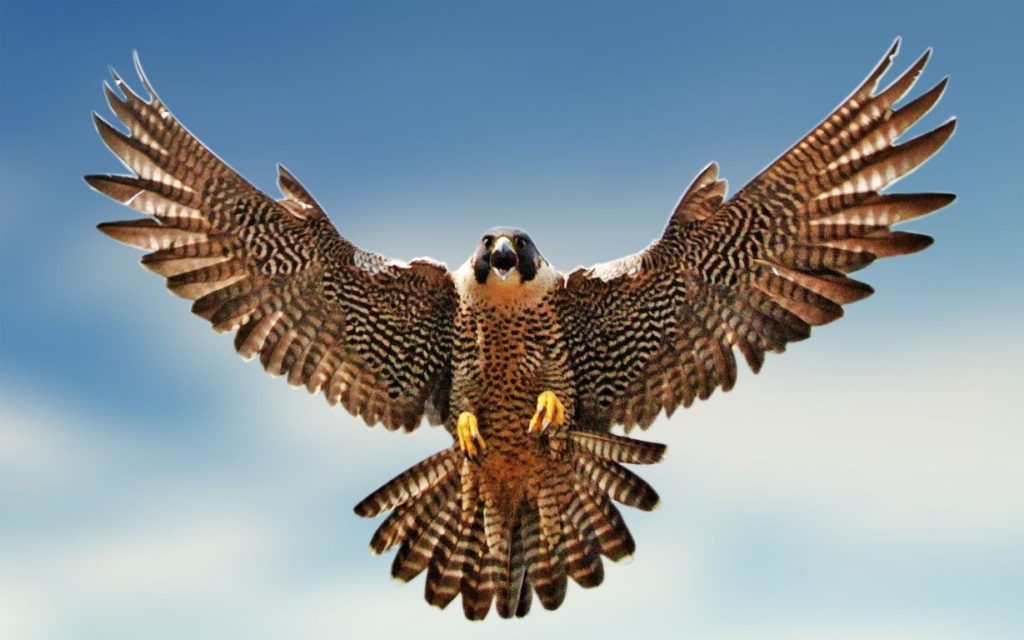
The saker falcon, has been declared as an endangered animal according to the IUCN red list. This bird inhabits steppes, sub-desert and open terrain of East Europe, Central Asia, Russia, China and Mongolia. For centuries falcons have been used in falconry. It is an art of hunting wild prey with trained falcons and hawks. This practice is common in the Middle East and Asia.
Falcons are trapped in the autumn and are used for hunting in the winter after receiving a special kind of training. In search of better hunting prospects, falconers from the Middle Eastern countries often visit Pakistan or Iran in the hunting season. Certain wild falcons are smuggled to gain profits. According to an estimate of the Birdlife International, of these the majority (77 per cent) is believed to be juvenile female falcons, followed by 19% adult females, 3% juvenile males and 1% adult males. The saker (falco cherrug) and the peregrine (falco peregrinus) are the two main species used for hunting and traditional falconry. The saker is popular because it is good for desert hawking. Comparatively, the female, being brave, larger and more powerful than the male, performs well during hunting.
Sakers are trapped illegally in the autumn, the time the birds’ young ones leave their nests, and migration starts. During the transit process, people hide these birds in garments or vessels or other such things because of which many birds die. Some of these birds are killed for stuffing/taxidermy. Most of these birds come from Russia, Kazakhstan, Mongolia, China, Afghanistan, Kirghizstan and Pakistan. According to a conservative estimate, about 9,000 falcons are used for falconry with an estimated 3,000 trapped wild saker and peregrine falcons. Due to the illegal trade, the saker falcon is fighting a battle for its survival.
They rare species of falcons are used to trap Houbara bustards. Younger falcons are used for hunting so a need to replace aging falcons with younger ones always remains. Pakistan is signatory to an International nature conservation treaty and Convention on International Trade in Endangered Species of Flora and Fauna (CITES). According to these treaties, transboundary trade of endangered species is restricted. Pakistan being the signatory member cannot allow trade of such species. Trapping and trade of falcons are banned under the wildlife protection laws of the country. There are no formal shops and markets anywhere for lawful sale and purchase of falcons. In the face of a ban on trapping and trade of falcons legally, a “falcon exporter” has to purchase illegally trapped falcons from illegal wildlife traders. The federal government and the exporter will be guilty of patronizing this illegal wildlife trafficking.
Besides violating various local wildlife protection laws as well as international nature conservation treaties, the government is putting at risk the Generalized System of Preferences (GSP) Plus status given to it by the European Union (EU). The status facilitates the easy access of Pakistani exports to the highly lucrative market of the European Union. A country having the GSP Plus status has to abide by international nature conservation treaties and if it violates these agreements, the EU has the powers to strip the state concerned off its GSP Plus status. This will badly affect foreign exchange earnings of a foreign currency-starved country.
by: Abeer Arshad



Leave a Reply
You must be logged in to post a comment.