
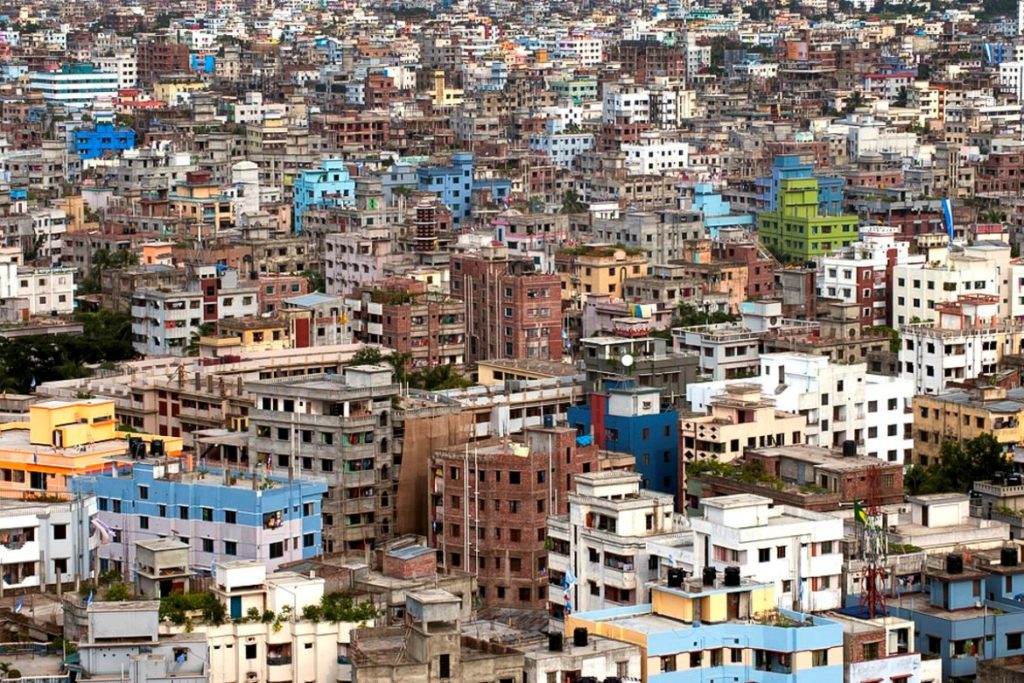
Pakistan is considered the most rapidly urbanizing country in Asia. An alarming UN report stated that Pakistan population is expected to climb to 403 million by 2050. Already, Pakistan is a country of 210 Million people with an annual growth rate of 2%, we are definitely heading towards another uncontrolled urban sprawl. We are facing various problems like energy crises, resource depletion and climate change and to make things worse our cities are facing flooding and pollution due to an improper infrastructure, inefficient consumption patterns, and flawed or absent planning and regulatory managements. Our cities are not sustainable: we will fail to leave anything for our future generations at the current consumption and resource-generation levels. Our population comprises of 60% youth. With 5.8% unemployment rate people are unable to find proper means of earning. Ultimately, they will move to the already congested cities in near future. This will also result in increase of population of slums causing more trouble for them.
There is a critical need for improving urban management and urban planning, which has been neglected from years. Despite the negative impacts of poor urban planning on the neediest sectors of the society, a little attention is paid on it. United Nation’s Sustainable Development Goal 8 emphasizes on development of sustainable cities and communities. It denotes that 95 % of urban sprawl will take place in developing world; Pakistan with its 40% urban dwellers, already 5th largest populous country is silently entering into another catastrophic era.
The destruction caused by recent rains particularly in Sind, is enough for the authorities to go towards sustainable urban management. Continuous downpour has damaged the roads immensely which is quite evident to the government. Although partial blame for this destruction can be put on climate change that has caused record rainfall in Karachi causing both physical and financial losses but this damage can’t be justified completely. Damage in rural areas can be expected as there is no proper infrastructure but why a metropolitan city like Karachi was unable to tolerate 100 mm of rainfall? The losses in Karachi could have been minimized if we had a proper system of drainage and sewerage. Adequate rains that are usually deemed a blessing for an agricultural economy become disasters, with relief efforts needed in Pakistan. The immense losses that the people have suffered due to heavy rains this year must be eye opener for federal and provincial governments. The authorities and policymakers must come together to formulate a strategy to deal with this issue.
It is because of lack of urban planning, our major cities are in the midst of moderate to severe water crises, and groundwater levels have gone down throughout the country. Part of the crisis is also due to excessive pumping for domestic, commercial and other use, and wasteful practices like washing cars using fresh running water. Concrete urban areas do not allow seepage of water leading to high level of surface water and clogs. Concrete surfaces also cause other environmental complications. They absorb heat and radiate it back into the surroundings. Air-conditioning systems also throw hot air out into the open, and fumes from vehicular traffic are significantly higher around key road corridors. Together, these factors are a source of smog and ‘urban heat island’ effect, due to which temperatures in cities are several degrees higher than the natural temperatures in surrounding areas.
It is an hour of the need that we completely rethink our cities and urban spaces to encourage environment-friendly, sustainable development practices.
Bottom line
It aims improving lives and living conditions in secondary cities setting up mechanisms for community participation in urban planning; reinforcing municipalities for better service delivery, and improving urban indicators implementing demonstrative projects through public private partnerships, community contracting and other delivery systems. The project also aims developing energy efficient technologies on housing construction.
by: Abeer Arshad



Leave a Reply
You must be logged in to post a comment.