
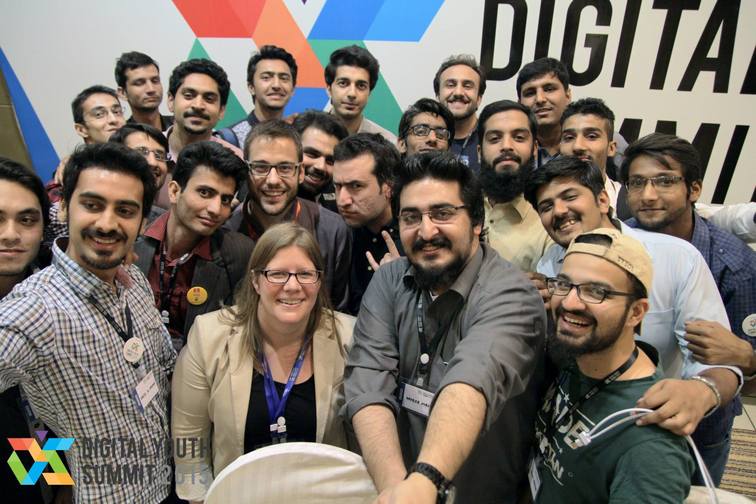
“The best start-ups come from somebody needing to scratch an itch” – Michael Arrington, founder and co-editor of Techcrunch.
Anyone in the United States, Australia or Europe will nod their heads undeniably thinking of the explosion of shining Apple logos on wooden bench tops of high street hubs that smell like coffee, every hour of the day. Entrepreneurs, figuring out the itches of their society, and quitting their day jobs for a chance to make a difference, or a small fortune.
Born in Peshawar, and now working in the tech industries of Australia, if I am to mention a thriving start up community in Peshawar to people, I’ll probably hear “What, like Airbnb and Uber for the Taliban?”
Pakistan is ranked third on the Global Terrorism Index, and repeatedly topping lists of the most dangerous cities in the world, so I can understand the perception of that being its only defining factor. But what Peshawar also has, is one of the fastest growing start up communities amongst cities facing insecurity due to terrorism. I spoke with Salman Ahmed, co-founder of Peshawar 2.0, an organisation determined to create a start up eco system in Peshawar, and challenge these perception about the city. “If you search the city Peshawar on Google, it’s never something positive. We wanted Peshawar to be on the news for technology, for design and for art. For people to regard Peshawar as one of the biggest hubs of entrepreneurship – because that is what we are.”
If the solutions of the East are scratching an itch, the start up communities of Pakistan have a lot of innovating to do in order to ease the plethora of social itches that face them.
In 2013, the start up communities in the United States, Europe and Australia were established and flourishing. Peshawar? Completely devoid of a tech start up scene. Peshawar 2.0 ran, and continue to run week long bootcamps and workshops across 11 campuses of Peshawar universities, on the core principles of how start ups work, and how young people can get involved.
By 2014, Peshawar 2.0 founders had the backing of the provincial government, the World Bank and Nestle, and pulled of the first tech conference of its kind. The following year saw Peshawar’s first ever Civic Hackathon, with over 60 candidates prototyping mobile and web based solutions over two days. The outcomes? Solutions to some of the very real issues facing Pakistani’s today. Solutions pitched used geolocation to SMS family members your location every hour without you ever touching your phone – because getting safely from A to B is a risk residents take every day. Another used geolocation for emergency services which helps locate civilians during casualties caused by suicide bombs. One of my favourites was an idea called NoKunda, which empowers citizens to report and track power theft and collaborate with government agencies – bridging the divide between citizens and agencies. And with only 3% to 10% of Pakistan’s population having Internet access, the challenge of crowd funding, collaboration and co-working is even harder. Base funding aside, as the days get warmer, electricity cuts out more frequently, for hours and days – an issue most Australian start ups never have to face.
Despite day to day adversity, hackathons in Peshawar have attracted over 200 people, with 20% of the crowd women – a competitive statistic with the tech gender break down in the United States and Australia. Last month, Peshawar 2.0 collaborated with universities and the Chamber of Commerce to run workshops with over 60 women to encourage and empower them to pursue a career in entrepreneurship.
Peshawar 2.0 want the youth of their city to know that “if a guy or girl in a hostel in the United States can come up with Facebook, so can you.” They may not have come up with Facebook, but the city’s youth are creating solutions to the every day realities they face. I asked Salman what the future for start ups in Peshawar holds. “The city needs private investors, crowd funders, help from the government and local entrepreneurs. We’re a step closer to creating a strong innovation eco system in the city” and with or without support, the city is more than halfway there. According to Peshawar’s Minister for Information Technology “The province is ready for a tech revolution.”
source: report.cnn.com
Tags: Business news from Pakistan, Pakistan Tech Industry, Peshawar 2.0, Peshawar hackathons, Peshawar's Silicon Valley




Leave a Reply
You must be logged in to post a comment.