
Since Pakistan reported its first COVID-19 case in February, experts from all spheres of life expressed their fears regarding the mortality rate and number of COVID-19 cases in the future. As the COVID-19 cases increased in the country, surprisingly Khyber Pakhtunkhwa reported the highest mortality rate, which was followed by different explanations and justifications, but one explanation that remained curiously absent was air pollution. This was due to the fact that in the summer season the concentration of air pollutants is comparatively low. On June 13th, Pakistan reported its highest number of Covid-19 cases, but by July there was a decline in the cases of local transmissions in the country.
As a result of this, it was thought that COVID-19 is over and life returned to pre-COVID-19 period, and it was believed that Pakistan had successfully tackled Covid-19. Unfortunately, Pakistan is now experiencing the second wave of Covid-19 but this time its winter. It is now believed that the infections and mortality rates will be different to what we experienced during the first wave in the summer.
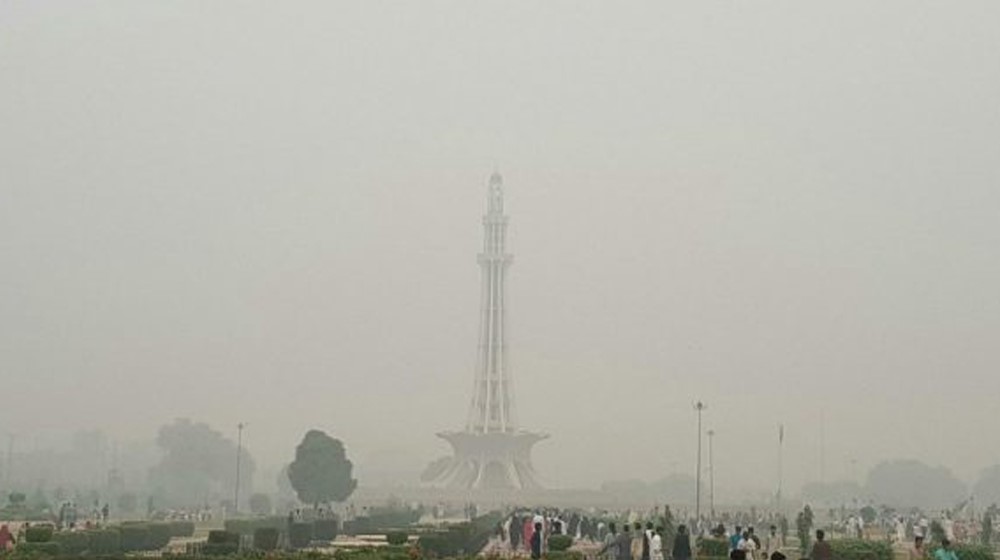
This time we are facing air pollution that is going to impact the number of COVID-19 cases in the country. According to the World Health Organization (WHO) air quality guidelines, concentration of PM2.5 in the air at 10 µg/m3 is rendered to be safe. However, Pakistan has an annual average of PM2.5 of 65.81µg/m3, and was is ranked as the second most polluted country in the 2019 World Air Quality Report. The report also highlighted that the cities with high air pollution levels observe ten times more annual hours in the highest US AQI bracket (250.4 µg/m3) than in the US AQI bracket which meets the WHO annual target (<10 µg/m3). With the winter approaching, Pakistan is experiencing for another smog episode linked to the high pollutant concentrations due to waste crop burning, vehicular and industrial emissions, increased fuel burning for heating, and smoke from brick kilns.
According to the researchers, air pollution is closely linked to weakening the immune system. It is no surprise that air pollution is the cause of respiratory diseases. Moreover, the presence of high particulate matter and nitrogen dioxide in the air is also linked to an increase in the spread of the virus since they can act as vectors which increase the number of receptors by 100 folds in the lungs to which the virus binds. Therefore, citizens who have lived in cities with poor air quality often have weakened defense system and damaged lungs; hence rendering them more susceptible to the impacts of Covid-19. Chronic lung exposure to nitrogen dioxide acts as a potent oxidant depleting anti-oxidant stores, leading to impaired tissue defenses which may also lead to pulmonary damage in Covid-19 patients. This can further give rise to the number of individuals contracting the virus and can burden the already struggling healthcare system of the country.
All we can do is to follow the SOPs and prevention is the key to survival. The government needs to take revolutionary steps to deal with air pollution. Factories and brick kilns that are the major sources of the air emissions should make transitions to cleaner technologies
by: Abeer Arshad



Leave a Reply
You must be logged in to post a comment.