
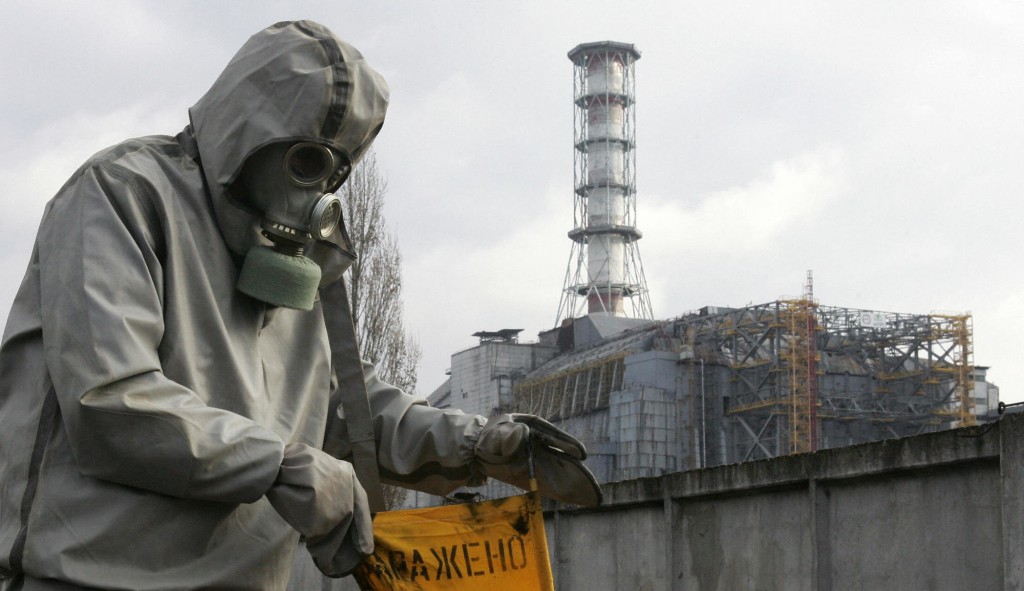
Prypyat, Ukraine which inhabited 30,000 people, had retired to its slumber with hours away from the dawn of a new day when an explosion erupted in the outskirts of the town, followed by another outburst; bluish violet light beam illuminated the sky at 1:23 am 26th April 1986. The beam composed of ionized air particles emanating from an exposed core of a nuclear reactor that had blown to bits moments ago, and thus began unfolding of an event that Mikhail Gorbachev, the premiere whose presidential term oversaw the dismantling of USSR hailed as “the real cause of the collapse of the Soviet Union.” more than his Perestroika (liberal reforms)—Chernobyl Nuclear Disaster.
Chernobyl Nuclear Disaster is often considered as one of the worst man-made nuclear disasters in the entire history, occurring at a nuclear plant settlement of Prypyat, 16 km northwest of the city of Chernobyl. The V.I. Lenin Nuclear Power Station which provided 1,000MW of electric power had four RBMK reactors. It was scheduled for routine maintenance to “determine how long turbines would spin and supply power to the main circulating pumps following a loss of main electrical power supply” in a finding by World Nuclear Association.
Mindful of the complexities that resulted in a catastrophe, the incompetency of undertrained operators at ‘reactor 4’ was exhibited by a poorly designed experiment where they proceeded with crucially misguided operations, such as disabling of automatic emergency shutdown, and continued to operate the reactor below 7pc power while withdrawing most of control rods from its core, culminated into relative instability of the core that could not be contained even by shutting down the reactor. Uninterrupted chain reaction triggered a power surge which blasted the heavy steel and concrete lid of the reactor, allowing the radioactive material into the atmosphere, which contaminated the winds from Ukraine to Russia, Scandinavia and Europe. Violation of safety protocols and technical flaws of Soviet RBMK reactors caused radiation exposure which was 400 times more than atomic bombs dropped at Hiroshima and Nagasaki combined.
An Exclusion Zone of 30km radius was set, while some 350,000 people were evacuated while upto 10 million people were exposed to radiation, with some developing radiation induced illnesses. Millions of acres of forests and farmlands were rendered contaminated. Thousands of livestock were shot down amid fears of contamination and those who survived, bore deformed stock. According to a report “Financial Costs of Chernobyl Nuclear Plant Disaster” of University of South California, a staggering $700B was lost to The Soviet economy.
Soviet Union was a totalitarian regime which exercised secrecy and extreme censorship to crush any dissent against ‘infallible Soviet Russia’. This is substantiated by the very fact that Soviet Union tried to conceal it from the world and put even its people in danger until a nuclear plant in Sweden discovered contagious amount of radiation in the air, which lead them to announce it on April 28. Even then from time, the Soviets tried to downplay the cause and effects of the radiation as an attempt to “exhibit strength”.
However, Gorbachev’s attempt to restructure society by introducing Glasnost (meaning “openness”) allowed criticism and removed censorship from press and public forum. For decades, the state instilled a sense of superiority of its institutions against the world but now they were upset at incompetency of state institutions and their unsophisticated response. It had become apparent that state failed to protect them in crisis and it was indeed fallible. Anti-nuclear movements gained momentum, the rift between state and the people peaked and in 1991, on Christmas day due to political upheaval caused by Chernobyl, the Soviet Union become undone.
by: Ahsan Anwar
Tags: Chernobyl and fall of Soviet Union




Leave a Reply
You must be logged in to post a comment.