
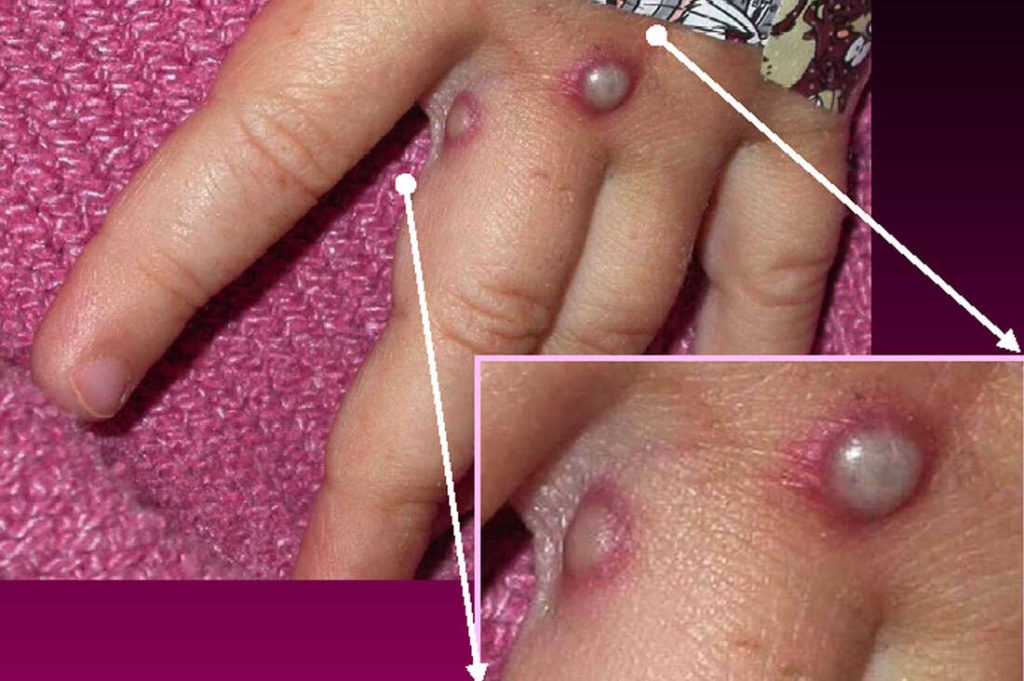
Monkeypox is a viral zoonosis (a virus transmitted to humans from animals) with symptoms very similar to those seen in the past in smallpox patients, although it is clinically less severe. With the eradication of smallpox in 1980 and subsequent cessation of smallpox vaccination, monkeypox has emerged as the most important orthopoxvirus for public health. Monkeypox primarily occurs in Central and West Africa, often in proximity to tropical rainforests and has been increasingly appearing in urban areas. Animal hosts include a range of rodents and non-human primates.
What is monkeypox?
Monkeypox is a rare disease caused by the monkeypox virus. It leads to rash and flu-like symptoms. Like the better known virus that causes smallpox, it is classified as an orthopoxvirus. Monkeypox was discovered in 1958 when two outbreaks of a pox-like disease occurred in groups of monkeys being used for research. Despite its name, the monkeypox virus no longer comes from monkeys. Scientists aren’t certain, but it’s thought to be spread by small rodents and squirrels in the rainforests of Africa. There are two types (strains) of monkeypox virus — Central African and West African. Central African monkeypox virus causes more severe infections and is more likely to cause death than West African monkeypox virus.
How dangerous is it?
Monkeypox cases can occasionally be more severe, with some deaths having been reported in West Africa. However, health authorities stress that we are not on the brink of a serious outbreak and the risks to the general public remain very low. “While investigations remain ongoing to determine the source of infection, it is important to emphasize it does not spread easily between people and requires close personal contact with an infected symptomatic person,” Colin Brown, director of clinical and emerging infections at the UKHSA, said Saturday.
Health authorities in the U.K., U.S. and Canada urged people who experience new rashes or are concerned about monkeypox to contact their health-care provider.
The UKHSA added that it is reaching out and providing advice to any potential close contacts of cases and health-care worker who may have come into contact with infected patients.
Signs and symptoms
The incubation period (interval from infection to onset of symptoms) of monkeypox is usually from 6 to 13 days but can range from 5 to 21 days.
The infection can be divided into two periods:
Monkeypox is usually a self-limited disease with the symptoms lasting from 2 to 4 weeks. Severe cases occur more commonly among children and are related to the extent of virus exposure, patient health status and nature of complications. Underlying immune deficiencies may lead to worse outcomes. Although vaccination against smallpox was protective in the past, today persons younger than 40 to 50 years of age (depending on the country) may be more susceptible to monkeypox due to cessation of smallpox vaccination campaigns globally after eradication of the disease. Complications of monkeypox can include secondary infections, bronchopneumonia, sepsis, encephalitis, and infection of the cornea with ensuing loss of vision. The extent to which asymptomatic infection may occur is unknown.
The case fatality ratio of monkeypox has historically ranged from 0 to 11 % in the general population and has been higher among young children. In recent times, the case fatality ratio has been around 3-6%.
How do you catch it?
Monkeypox can be spread when someone is in close contact with an infected person. The virus can enter the body through broken skin, the respiratory tract or through the eyes, nose or mouth.
It has not previously been described as a sexually transmitted infection, but it can be passed on by direct contact during sex.
It can also be spread by contact with infected animals such as monkeys, rats and squirrels, or by virus-contaminated objects, such as bedding and clothing.
Is monkeypox curable?
There’s currently no proven, safe treatment available for monkeypox. Antiviral drugs may help, but they haven’t been studied as a treatment for monkeypox. Instead, your healthcare provider will monitor your condition and try to relieve your symptoms. Most people get better on their own without treatment. If there is an outbreak of monkeypox in multiple people, the Center for Disease Control (CDC) has options to control the spread of the disease using the smallpox vaccine and other treatments.
Source: WHO, BBC, CBS, Khaleetimes




Leave a Reply
You must be logged in to post a comment.