
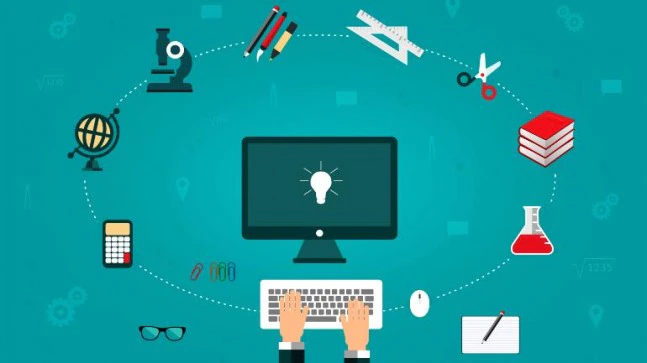
An emerging technology in education is a technology that is currently uncommon in education sector but has the potential to be widely adopted to support improvements in learning and teaching. Several of these technologies have been emerging for many years, are evolving at an increasing rate and may remain in a continuous evolution for years to come. Some are in the process of being prepared or have found their way into mainstream education, but others may still be a long way from being mainstreamed. The consensus is that these technologies can be used to improve the quality and efficiency of teaching, curriculum, learning, and assessment. There are many new forms of emerging technology being developed for the education system. These include virtual reality (VR), augmented reality (AR), artificial intelligence (AI), machine learning (ML), virtual assistants like Siri and Alexa, and more.
Emerging technologies like artificial intelligence (AI) and virtual reality (VR) have made their way into the mainstream education sector. These are now being used to enhance learning and teaching experience. The impact of this emerging technology on the entire education system will be profound and completely transform the current way of teaching. Whereas, when adopting emerging technologies, it is important to identify their likely evolution, the likely problems that may arise in their adoption, and the potential for a gap between those who are using them and those who are not.
Artificial Intelligence is becoming the future of education, and it’s being looked at in all educational fields. This includes elementary schools to higher education, and institutions around the world are taking advantage of AI integration. The use of AI in education can be categorized into three levels, namely, content creation and interaction, knowledge management, and virtual tutors. The use of AI in the education classroom is still new, but it is steadily gaining traction. AI-assisted teaching assistants are already being used in classrooms to provide personalized feedback to students, help them learn at their own pace and provide teachers with valuable data about student progress. AI-assistive technologies are also being used in assessment as well as grading. AI assistants can provide them with information about the subject they are studying, answer questions, and even help them with their homework. They can be used as a tutor for students who need extra help or as an assistant to teachers who want to make sure that all their students are on track. Automated essay scoring is now a reality and has been shown to be more accurate than human graders on certain types of essays.
Virtual Reality (VR) is one of the best things that can really help anyone take a class, no matter where they are. There are many people who may not have the privilege of attending a classroom, such as many graduate students or working professionals pursuing their degree on-line. One of the best examples is Stanford Business School, which already offers a certificate program that can be delivered entirely via VR. The best application of VR learning is virtual tours. Students don’t have to move from their seat to travel anywhere in the world virtually. Imagine you are in a geography, history, astrophysics or space science class and you are learning about a certain place and its importance, while being able to see everything that is being taught.
by: Monica Bian
Author is Master Student and can be reached on [email protected]


Leave a Reply
You must be logged in to post a comment.