
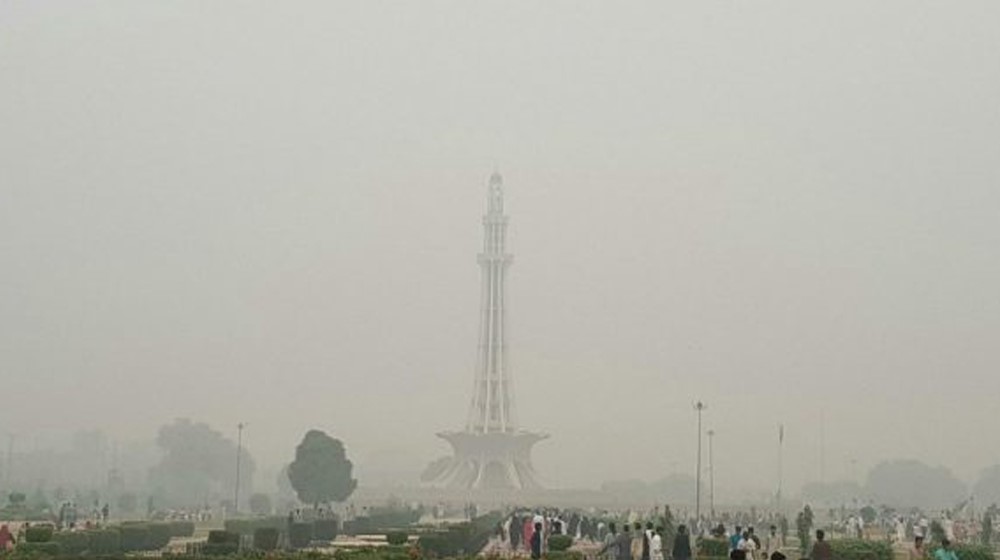
Winters in Pakistan are not so pleasant, not because of the chill in the air but because of the poor air quality. Just like winter in the previous year, the air quality of the country began to deteriorate on the onset of the winters. Last week, Lahore and Karachi’s air quality scored over 200 on the Air Quality Index (AQI) to top the list of the world’s cities with the worst air quality. This means the quality is very hazardous.
Not just in Lahore, levels of air quality have been reported to be “near unhealthy” and “very unhealthy” for most of the year in Punjab. During the “smog season” that is from November to January, air quality reaches “hazardous” levels, as recorded by multiple, independent sources including the air quality monitors installed by the United States Consulate in Lahore and the crowdsourced data collated by the Pakistan Air Quality Initiative. Two days back, Lahore’s air quality based on an aggregate of four monitors was around 170, Multan’s was 159, Bahawalpur’s was 154, and Rawalpindi, was 154.
Pakistan’s major cities, mainly in Punjab province choke on smog, driven in part by smoke from bricks kiln and steel mills, burning of rice stubble and garbage, growing numbers of vehicular emissions and deforestation as the expanding cities make way for new roads and buildings. The air pollution is bad throughout the year, but in the winter there is temperature inversion where a layer of warm air is prevented from rising and it traps all the pollutants below it, which renders them visible. The inversion cloud acts like a lid, trapping air pollution over the area producing it. And it lasts as long as the inversion cloud isn’t blown away or dissipated by rain.
According to the World Health Organization (WHO) ambient air pollution is a major cause of death and disease globally, with an estimated 4.2 million premature deaths per year, mainly from heart disease, stroke, chronic obstructive pulmonary disease, cancer and acute respiratory infections in children. It very unfortunate that air pollution in the country is discussed only when smog starts developing in the winters. It is a cause for serious concern and about time the government and public pay attention to improving air quality throughout the year. Such air causes real health issues like asthma, lung damage, bronchial infections and heart problems and in today’s circumstances when we are fighting the COVID-19 pandemic, it can worsen COVID-19 symptoms.
The Lahore High Court once ordered the Punjab provincial government to implement recommendations of the Smog Commission, set up by the court in 2017 to look at the drivers of smog and find ways to reduce them. The mitigation steps included reducing emissions from factories, closing brick kilns that fail to use fuel-efficient technology, and imposing fines on polluting vehicles and farmers burning rice stubble in the winter. The commission also ordered the planting of trees in urban areas.
These efforts are still not enough. Agricultural and industrial sector needs to use efficient devices that will help to mitigate air pollution.
by: Abeer Arshad



Leave a Reply
You must be logged in to post a comment.