

Pakistan is the country blessed with great scenic beauty having almost all the ecosystems e.g. Himalayan pine forests, riverine forests, mangrove forests, Trans-Himalayan Plateau, fresh water lakes, salt lakes, deserts etc. Therefore, the country has a wide range of flora and fauna. The wildlife of Pakistan is made up of thousands of species of flora and fauna. The fauna species is made up of 173 mammalians among other animals and birds. It is very disappointing that about 90 species of mammals, reptiles and birds are approaching the critical stage of extinction in Pakistan. A few mammals sadly have been reported to be vanished from the wildlife’s habitat, which include the tiger, deer the notable being blackbucks, lion and Indian horned rhinoceros. Some of the threatened species of Pakistan are:
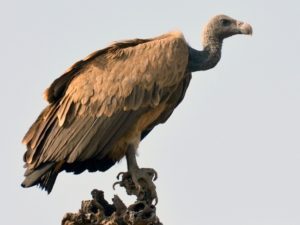
Commonly identified as Long-billed Vulture, the Indian Vulture breeds mainly on crags in the mountains of Pakistan and India. It is a forager and a scavenger, feeding on dead animals which it finds by towering in flocks over savanna and around human being habitation. It has hairless head, very wide. It has been listed as Critically Endangered on the International Union for the Conservation of Nature (IUCN) Red List since 2002, as the population is severely declining.
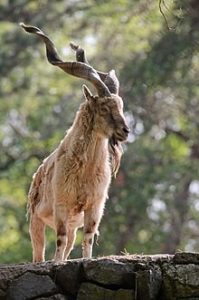
Markhor is the national animal of Pakistan. It is on the brink of extinction, too. This wild goat is classified as “near threatened” by the IUCN. There is some good news, though. It was discovered in early 2015 that their population has increased by 20%.
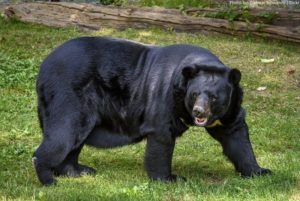
This big black monster seems to be an interesting hunting trophy for many people. That and expansion of human settlement into wildlife territory has affected their growth putting a threat on their species. It is unfortunate that people are destroying it for personal pleasure.
· Pakistan Sand Cat
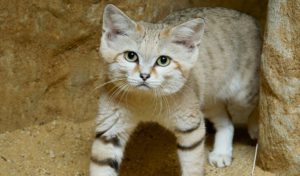
The Pakistan Sand Cat, Felis margarita scheffeli, belongs to the sand cat subspecies originating from the Nushki Desert in Pakistan. It was listed by IUCN as Near Threatened in 2002 because of its fragmented population characterized by the declining trends. Its name originates from its habitat in the Pakistani sand desert. It is a small cat with a flat wide head, a slender tail approximately 20 to 30 centimeters long, and short legs. Pakistan Sand Cat has a thick, pale sandy fur with a blackish bar on the limbs. They live in burrows while their primary preys include the small rodents, reptiles, and birds.
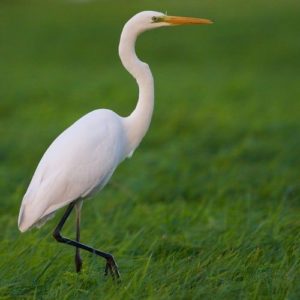
They have four types Siberian, Sarus, Demoiselle and Common Crane. Out of the four crane species found in Pakistan, Siberian cranes (Grus leucogeranus) are rare and seldom seen. The status of Sarus cranes (Grus antigone) is vagrant. They have been locally extinct as breeding birds since 1968. Demoiselle cranes (Anthropoides virgo) are seen quite often on migration, but are ruthlessly hunted in the Bannu District, NWFP. Common cranes (Grus grus) are scarce and there are no permanent wintering populations. They are not often seen, even on migration.
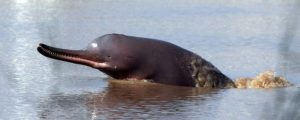
The Indus River dolphin is one of the world’s rarest mammals that is critically endangered with an estimate of 1000 living in the wild as reported by IUCN. The Indus River Dolphin has a long beak and a stocky body. It has a low triangular hump on its back. It is only found in Indus waters of Pakistan.
· Marco Polo sheep
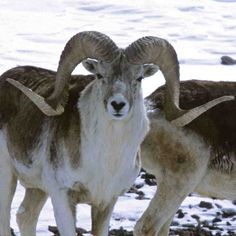
Marco Polo sheep (Ovis ammon) have a scattered distribution in the Karakorum Mountain Range and Hindu Kush. In Pakistan, they are mostly found in the Khunjerab National Park and adjoining areas. The sheep have an endangered status and their numbers have been rapidly decreasing in the last two decades.
· Punjab Urial
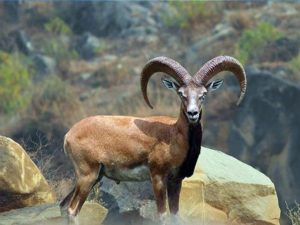
The Salt Range, which is the primary habitat of the Punjab Urial, is facing rapid degradation. Primary among these threats are activities, such as exploitation of mineral reserves and widespread poaching, for economic and sustenance reasons.
· Woolly Flying Squirrel
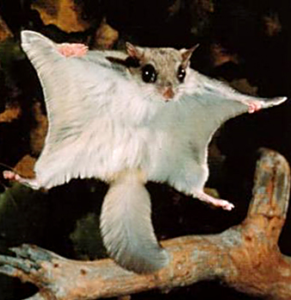
Local sightings of the endemic Woolly flying squirrel (Eupetaurus cinereus), once thought to be extinct, provided the impetus for undertaking initial surveys to verify its presence in the Northern Areas of Pakistan. The surveys not only confirmed the presence of this species, but also indicated viable population levels. WWF-P has established the ecological status of the Woolly flying squirrels and has also identified critical habitat areas in the Sai valley.
· White-Headed Duck
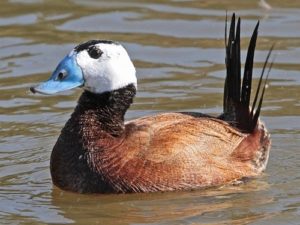
Wintering populations of the globally significant white-headed duck (Oxyura leucocephala) have decreased significantly in number during the last few years, with only an estimated 50 birds remaining. Wintering sites in Pakistan are limited to three adjoining wetlands, known as the Ucchali Complex in Punjab.
by: Abeer Arshad



Leave a Reply
You must be logged in to post a comment.