
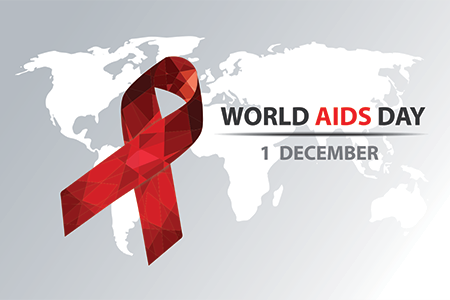
World AIDS Day is an annual event held on December 1st every year. It started in 1988, the purpose of this day is to raise awareness about human immunodeficiency virus (HIV) and Acquired immunodeficiency syndrome (AIDS) by sharing information concerning prevention, treatment, and control, as well as to honor and mourn the many lives lost to this deadly disease. The focus of this year’s 30th Annual World AIDS Day is to find a cure for this deadly disease.
Back in times when World AIDS Day began the disease was considered a death sentence, but latest research into detection and cures has improved life expectancy. Research such as antiretroviral therapies have transformed treatment for HIV. Other novel research studies are investigating diverse strategies from immunotherapy to genetic engineering to vaccine development. Major breakthrough is expected in the coming years.
HIV is a virus that attacks cells that help the body fight infection, making a person more vulnerable to other infections and diseases. AIDS is a chronic, potentially life-threatening condition caused by HIV. By damaging your immune system, HIV interferes with your body’s ability to fight infection and disease. HIV is a sexually transmitted disease that can also be spread by contact with infected body fluids such as blood or saliva. It can spread from mother to child during pregnancy, childbirth or breast-feeding. Without medication, it may take years before HIV weakens your immune system to the point that you have AIDS. There’s no cure for HIV/AIDS, but there are medications that can dramatically slow the progression of the disease. These drugs have reduced AIDS related deaths in many developed nations.
Some facts about HIV
Countries most affected with HIV
More than 36 million people worldwide are affected with HIV/AIDS, more than two thirds of them in sub-Saharan Africa. At least 2 million infected adults live in each of five countries: Ethiopia, India, Kenya, Nigeria and South Africa. In five African countries, Botswana, Lesotho, Swaziland, Zambia and Zimbabwe, at least one in five adults has HIV or AIDS. Eight African countries will have lost at least 17 years of life expectancy to the AIDS epidemic by 2000-2005, namely, Botswana, Kenya, Lesotho, Namibia, South Africa, Swaziland, Zambia and Zimbabwe. In Botswana, life expectancy in 1995-2000 is already 23 years less than it would have been if there had been no AIDS-related mortality, and the shortfall will be 34 years by 2000-2005.
Most of the deaths caused by AIDS occur to people in younger age groups; the loss of these young lives disproportionately affects productivity and economic growth and the social fabric of family and society. About 310,000 persons died in 1999 of AIDS in India. Ethiopia and Nigeria also each had at least a quarter of a million AIDS deaths. AIDS caused more deaths in India than in any other country.
by: Abeer Arshad




Leave a Reply
You must be logged in to post a comment.