
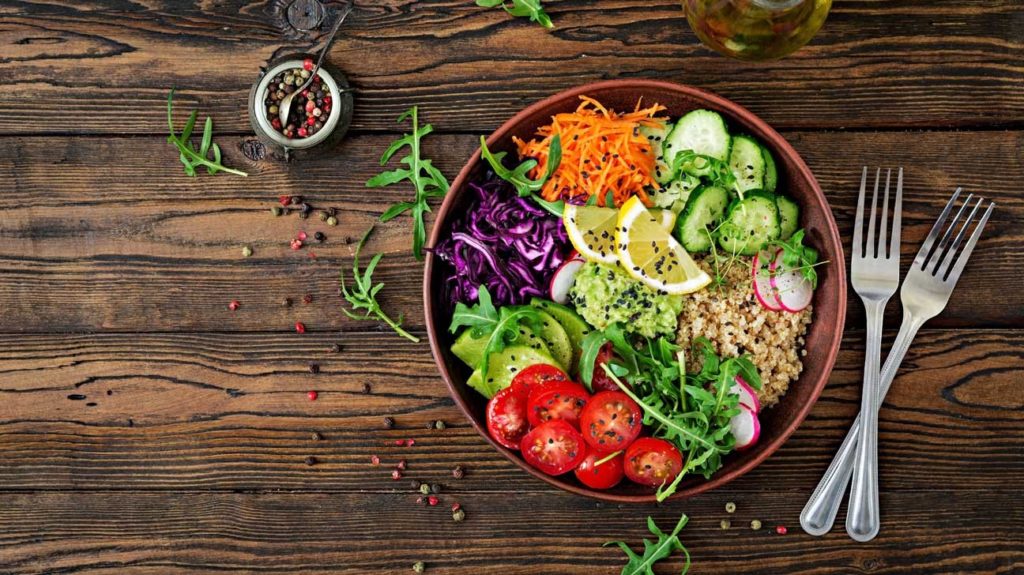
The vegetarian diet is gaining popularity among the masses. Some studies report that vegetarians account for up to 18% of the global population. Apart from the ethical and environmental benefits of cutting meat from your diet, a well-planned vegetarian diet may also help in reducing risks of chronic diseases, support weight loss and improve the quality of your diet.
What Is a Vegetarian Diet?
The vegetarian diet involves avoiding meat, fish and poultry in your diet. Some people go for a vegetarian diet for religious or personal reasons, as well as ethical issues, such as animal rights. Others decide to become vegetarian for environmental reasons, as livestock production increases greenhouse gas emissions, contributes to climate change and requires large amounts of water, energy and natural resources. There are different types of vegetarianism:
Here are five myths about vegetarianism:
Guaranteed weight loss
If you are going for vegetarian diet for weight loss, here is what you need to know. Contrary to popular belief, a vegetarian diet can never directly cause weight loss as believed by many. However, it may indirectly promote portion control as the fibre and protein found in veggies and fruits will satisfy you better, reducing sudden hunger pangs.
Lack of variety
A vegetarian diet is not boring Itis one of the biggest myths associated with it! No, you don’t have to stick to similar kind of plants. You have an array of lentils, fresh veggies, and newer options to choose from to make your plate more exciting!
Fruit sugar is fattening
Many people also worry about high sugar intake because of the intake of fruits in the diet. There’s really nothing to worry about as much as if you were to consume cakes or pastries, which have refined sugar. The natural variant found in fruits has fructose, vitamins, minerals, and phytonutrients, which reduces the risk of any diseases.
Vegetarian Diets is not for pregnant women, children or athletes
A well-planned vegetarian diet can meet the nutrient needs of people from all stages of life, including pregnant and lactating women, children and athletes. It’s just about making sure you get the nutrients you need. Pregnant women, for example, need more iron; expectant mothers should eat plenty of iron-rich foods and include a source of vitamin C to help increase absorption (iron is not absorbed well from plant-based sources).
For infants, children and adolescents, a vegetarian diet can promote normal growth. As with adults, vegan children may have slightly higher protein needs because of how the body digests plant protein. However, these needs typically can be fulfilled if the diet provides enough calories and diversity of foods.
And while most competitive athletes require increased energy, protein and nutrient needs for optimal performance, there’s no reason they can’t get everything they need nutritionally from plant sources.
by: Abeer Arshad



Leave a Reply
You must be logged in to post a comment.