
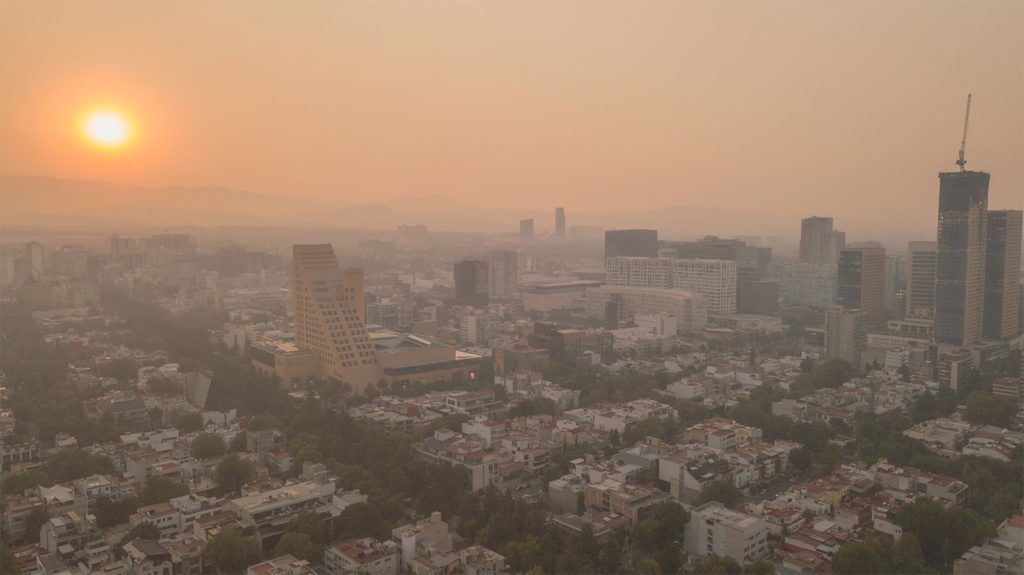
According to World Health Organization (WHO), 4.2 million people die every year due to poisonous air and 3.8 million die in their household due to the exposure to smoke from dirty cooking stoves and fuels. It is unfortunate that 91% of the world’s population lives in areas with poor air quality. In these areas air quality exceeds the limits set by the WHO for any air to be considered unpolluted which means that 9 out of ten people are breathing air that is potentially life-threatening.
Air pollution is the world’s top killer going beyond smoking that on average is responsible for reducing global life expectancy by 1.6 years per person. The University of Chicago’s Air Quality Life Index (AQLI) has established that in some parts of world, people’s lives could be cut down by 11 years on average owing to air pollution, thereby making life expectancy in those parts sink to around 58 from the overall figure of 69. Figures for Pakistan don’t seem any good either. The United Nations (UN) estimated that in 2015, the number of deaths that occurred in Pakistan because of air pollution was one of the highest in the world. An index that takes into account ‘age-standardized deaths per 100,000 people attributable to air pollution’ produced by the Health Effects Institute: State of Global Air 2018, has the figure for Pakistan as of 2016 set at 207, only second in the world after Afghanistan with 406. Declared a ‘public health emergency’, smog has in most places across the country become the ‘fifth season’. It has been recorded in the Air Quality Index (AQI) that the figures for Pakistan’s biggest city Lahore range on average from 100-500.
Poisonous air has more critical consequences for kids as compared to adults. Children under the age of five have a share of 630 million in the world’s population of whom nearly 70,000 die each year. Polluted air harms their brains, leaving millions of them condemned to a life of ill health. Poisonous air has engulfed half the kids’ population in the developed countries and nearly 98% of that of the developing ones. One reason why kids are suffering is because the lower the body weight, the higher the repercussions of taking in the fine particles: particles thinner than a single human hair that conveniently travel from the lungs to the brain, harming membranes which protect it from noxious substances. When these tiny particles that cannot be filtered by nose, enter into our bloodstream, they cause inflammation, and both tightening and hardening of the artery walls. It results in disturbance the blood pressure and creating chances of a heart attack. Taking in poisonous air impacts the heart’s ability to conduct electrical signals, and in the ensuing circumstances, makes its rhythms become irregular.
Rapid urbanization is the cause of polluted air. Factories and power plants are the source of pollutants that are life threating of living beings. These emissions, some of which are carbon dioxide, methane, nitrous oxide and fluorinated gasses, catch heat from the sun in earth’s atmosphere, resulting in a drastic rise in global temperatures. As a result, a cycle is created where air pollution contributes to climate change that, subsequently, creates higher temperatures. The latter, in turn, intensify some kinds of air pollution. One such is the increment in smog that is caused by high temperatures and increased levels of ultraviolent radiation. Smog is a type of air pollution that reduces visibility and has serious health effects on the human eye and respiratory system. Besides, it is also extremely harmful for plants.
The inaccessibility of parks and recreational areas where one can take a breather, can help to reduce impacts of pollutes air. Also, technology to help absorb the emissions, such as greenhouse gases and smog, should be introduced on an emergency basis in the industries. Awareness needs to be raised about the disadvantages of overconsumption of electricity. Since it is produced by burning coal that, sequentially, produces toxic gases that cause air pollution, governments need to step up to save the lives of the citizens because the world cannot take it anymore.
by: Abeer Arshad



Leave a Reply
You must be logged in to post a comment.