
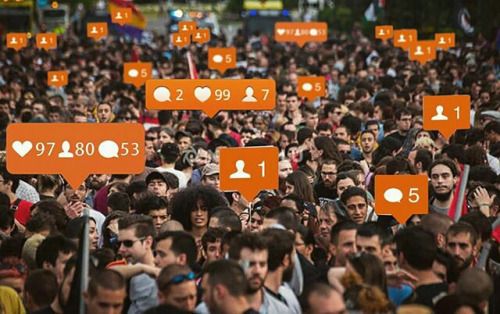
Social media has emerged as a game changer for today’s world, in so many ways. On one hand, it has totally changed the way people communicate with each other and on the hand it has changed people’s outlook towards business and technology with the tremendous expansion of businesses across the world.
Our youth is most vulnerable to these advancements. We can view social media as two sides of the same coin, bringing with it both positive and negative aspects. However, in recent years, it has been observed that negative consequences of social media are overshadowing the positive ones, especially when talking about the exposure of teenagers to it. Now, problems are not just limited to cyberbullying. Excess use of social media has resulted in poor academic performance, lack of interaction between family members, youth being dragged away from their culture, increased vulnerability towards sexting, and stress and anxiety due to cyberbullying.
It is no surprise that we all have been through times when we are scrolling through posts or watching YouTube videos and before we even realize an hour or two has already been passed. Social networking sites although have been accepted as a great resource for instant information, studies however, suggest that the negatives of social media are often overpowered by the merits. This belief can be supported by the fact that students mostly use social networking sites primarily for fun, to kill time, to meet existing friends or to make new ones on sites like Facebook or Instagram. These sites are designed in a way to attract maximum number audience. Thus, even if you do not have an initial intention of wasting your valuable time on social media, you still are entrapped by catchy thumbnails or meme pages. This deviates students from their actual objective, for which on the first place, they opened social media.
Moreover, this fact cannot be denied that students who tend to multitask often show reduced academic performance. Their ability to focus on the task is significantly reduced by distractions brought about by YouTube, Facebook, Instagram, Whatsapp, Twitter or Snapchat. To further add, obsessive use of social media does not go unnoticed by parents and teachers, as this correlation is clearly reflected on students’ result cards. In these uncertain times, increase in COVID-19 cases has restricted everyone inside their house. Consequently, the outdoor activities and sports are highly discouraged. As a result, youngsters often spend their free time using social media. Instead of investing this time in activities like fitness, meditation, learning new things, reading books, or researching on new disciplines, they are utilizing their time in likes, shares, comments, posting selfies, and chatting. Without realizing that paying little attention to personal development can bring about negative consequences, months, or years down the road.

One of the negative aspect of social media is cyberbullying. Cyberbullying is quite common among youth in Pakistan and those victimized by this often succumb to conditions of anxiety, self-isolation, severe depression, and in some cases even suicide.
There is another problem, youth gets inspired by the celebrity lifestyle presented on social media. Some teenagers are easily influenced by the magnificent lives and bodies documented on Instagram and Facebook. This not only erodes their self-confidence and self-esteem but they also constantly start comparing themselves with the person behind their mobile screen. Consequently, they start complaining to themselves for not being slimmer, prettier, stronger, taller, smarter, and the list goes on. These flawless pictures, being portrayed on social media, also have some profound psychological outcomes, making sensitive teenagers feel ostracized from society.
Using technology and social media is really important when living in this era, but what is more important is to maintain a balance between the virtual and real-world. If used without check, it can have some grave repercussions. It is up to us how we use social media.
by: Abeer Arshad




Leave a Reply
You must be logged in to post a comment.