
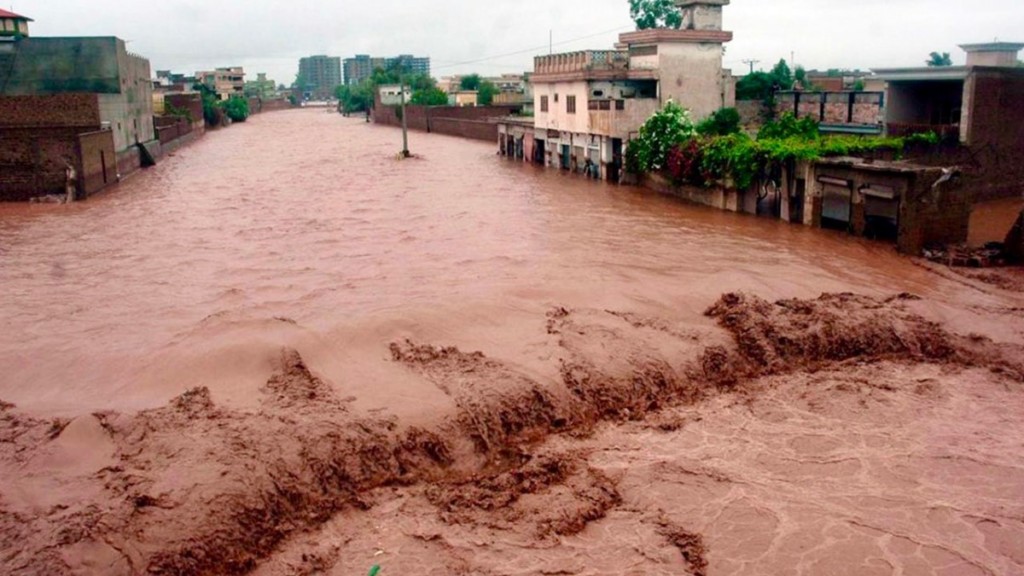
Monsoon rainfall during summer is the main source of fresh water for Pakistan that is used for agricultural practices and human sustenance. But this year monsoon rains caused havoc for Pakistan especially for the residents of Sindh. Torrential rains flooded huge areas of Sindh in the past few days; leading to nearly 40 deaths and damage and destruction to residences, infrastructure, and crops. Monsoon rains have always been the source of flooding in various areas of Pakistan but this time there were much more rains and destruction caused by them is enormous. Unfortunately, there are more rain spells predicted in the coming weeks.
As the damages caused by rains we saw in recent days, the factors that fueled flooding have been brewing for years in advance. Extreme rainfall aligns with the impact of climate change. It is crucial to point out that as the average temperature rises, the amount of moisture the atmosphere also increases. Researcher studies have point out that for nearly every degree Celsius rise in temperature, seven percent more moisture is absorbed by the air. This moisture, in turn, is then released through progressively increasing precipitation.
Rains in the first quarter of the year caused rivers to swell, and higher than average temperatures led weather forecasters to realize that monsoon-fueled rains would aggravate the risk of riverine, urban, and flash flooding, due to isolated extreme precipitation events characterized by localized heavy downpours.
This is evidenced by data from the Pakistan Meteorological Department, which reported above-normal precipitation. The monsoon season has witnessed variations in average temperature by 1oC-2oC. The department warned that warmer temperatures would increase glacial melt, and enhance water flow in rivers.
It is being said that the recent rain spell in Karachi that caused destruction on massive scale broke records of 90 years. Such rains occurred after the span of 90 years. While no individual weather event can be attributed to climate change, in these things there are signs for those who understand. For instance, the duration of heat waves has increased five times over the past three decades, while annual precipitation has shown higher variability and a slight overall increase. Rising temperatures will increase the likelihood of heavy rainfall, and the severity of that rainfall is also on the rise which is evident from what happened in the last few days in Sindh particularly in Karachi.
The predicted consequences of climate change in the coming years include more extreme floods and droughts, accelerated melting of glaciers increasing the risk of Glacial Lake Outburst Floods (GLOFs). GLOFs occur when ice walls retaining a lake fail, sending humongous volumes of stored water downstream in a devastating flash flood. Pakistan, home to over 2000 glacial lakes, faces GLOF risks in the Kashmir and Khyber Pakhtunkhwa regions where nearly seven million people are at risk. Accelerated glacial melting due to higher temperatures will not only increase the risk of glacial lake outburst flooding in Northern Pakistan, but could potentially alter river flows, creating a high risk of inundation in densely populated and cultivated areas downstream. Another risk, often overlooked, is sediment deposition, which may increase the risk of flooding even at lower flows.
by: Abeer Arshad




Leave a Reply
You must be logged in to post a comment.